
Tuesday, November 10th, 2026
WHO FUNDS INTEGRITY MATTERS?
Why Did It Use Another Organization’s Contact Information?
Integrity Matters has become a visible player in Colorado Springs land-use disputes, political campaigns, and legal challenges. Its leadership regularly calls for greater transparency from government officials and development interests.
But questions remain about the organization's financial supporters and its use of contact information from an unrelated national advocacy initiative.
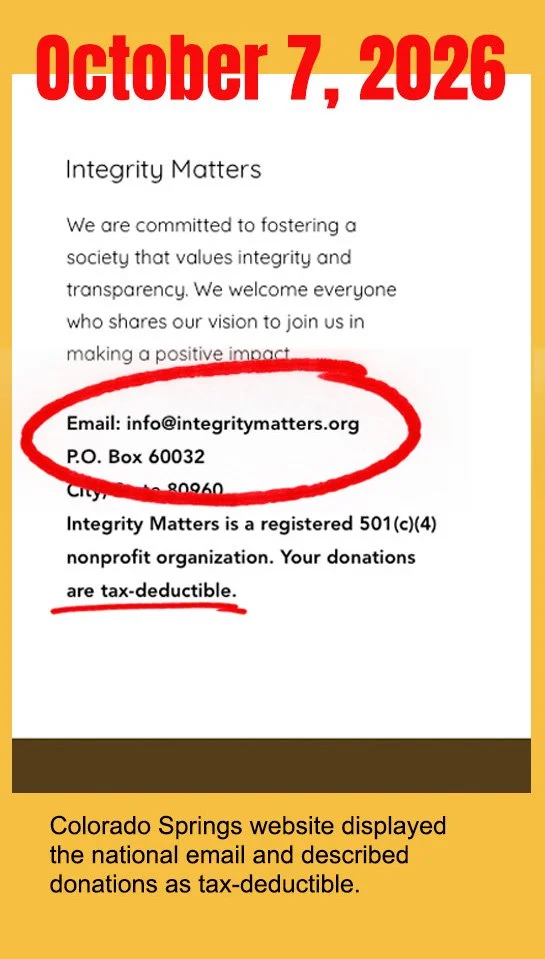
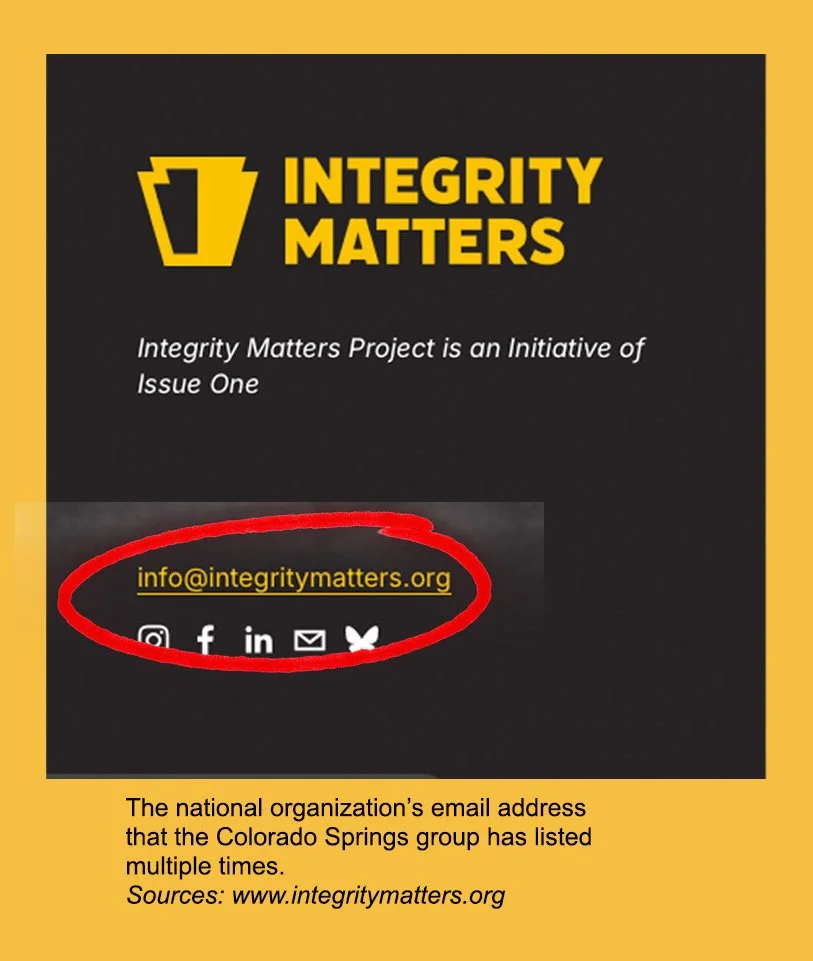
As recently as last month, screenshots from the Colorado Springs group’s website reflected the same email as the national, Washington, D.C.-based Integrity Matters email.
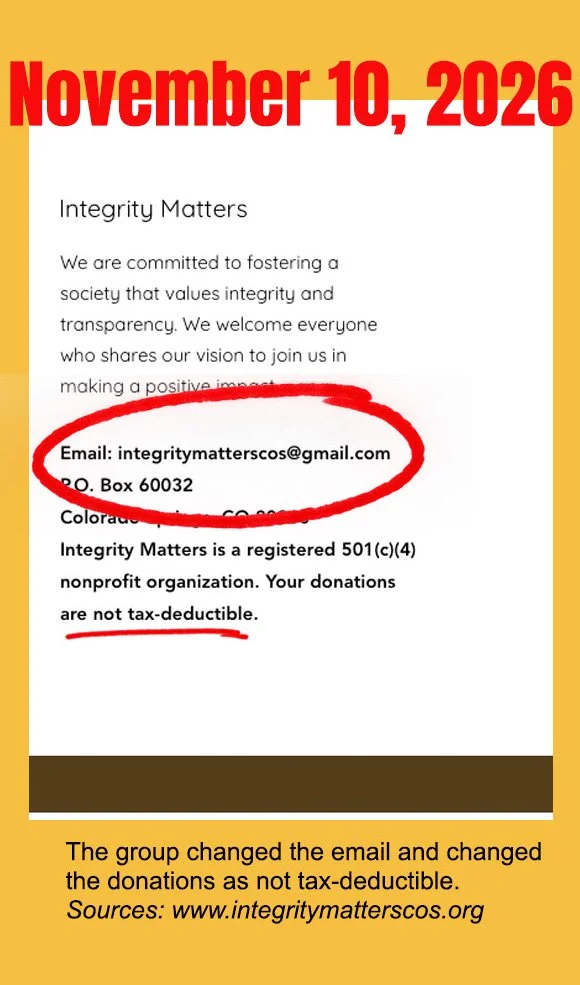
The group has since changed its contact email to a Gmail account that it also uses publicly. See below.
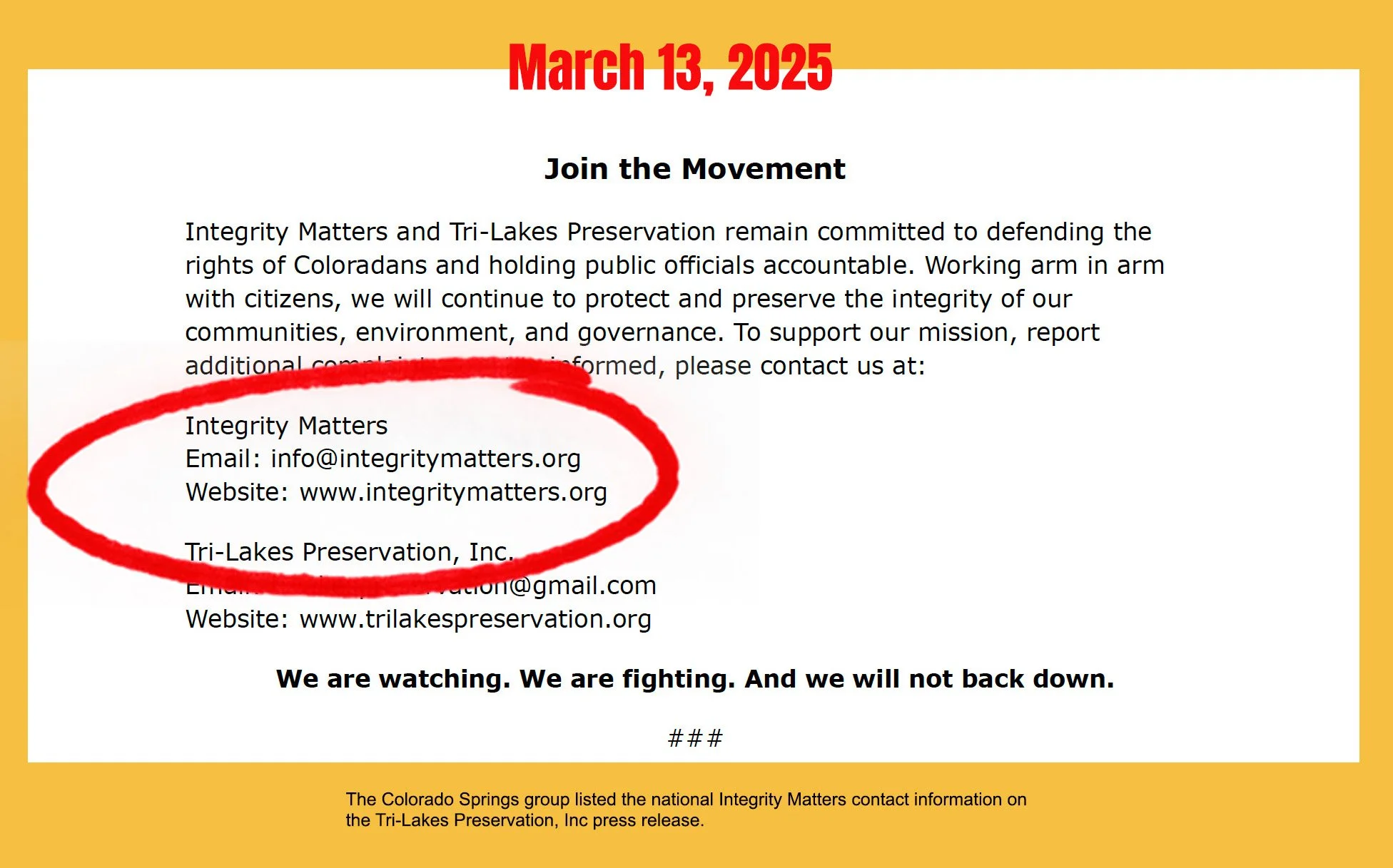
The overlap does not end there.
In a March 13, 2025, press release opposing a proposed Buc-ee's development in Palmer Lake, the Colorado organization listed both the national group's email address and its website, www.integritymatters.org, as its own contact information.
Another Question: Why Did the Donation Disclosure Change?
The Colorado Springs Integrity Matters website previously stated that donations to the organization were tax-deductible.
The October 7, 2026, screenshot documents that statement, despite the website identifying Integrity Matters as a 501(c)(4) nonprofit.
By November 10, 2026, the website had changed the language to state that donations are not tax-deductible.
The correction brings the website's description into line with the general federal tax treatment of contributions to 501(c)(4) organizations.
But questions remain. How long was the earlier statement displayed? Was the organization aware of the discrepancy? Were donors given inaccurate information when contributing?
The website correction does not establish that any donor claimed an improper deduction. Nevertheless, the discrepancy deserves a clear explanation from an organization whose stated mission emphasizes honesty and transparency.
Integrity Begins With Accountability
Integrity Matters has positioned itself as a watchdog over Colorado Springs government, elected officials, and development decisions. But an organization that demands transparency from others should expect reasonable scrutiny of its own operations.
The questions raised here are straightforward.
Why did the Colorado Springs organization repeatedly publish the contact information of a separate national advocacy group?
Was that use authorized?
Why did its website previously describe donations as tax-deductible?
And who provides the financial support behind its legal challenges?
These questions do not establish wrongdoing. But they deserve answers.
Colorado Springs residents and elected officials should be able to evaluate Integrity Matters based on accurate information about its leadership, financial practices, organizational relationships, and record of public advocacy.
Integrity Matters has every right to advocate for its positions and challenge government decisions. That right does not exempt it from the same public scrutiny it applies to others.
If Integrity Matters demands accountability from Colorado Springs, it should be prepared to answer questions about its own.